3rd February 2026
Aditya Jayaram on ambition, dedication and process
Hello everybody,
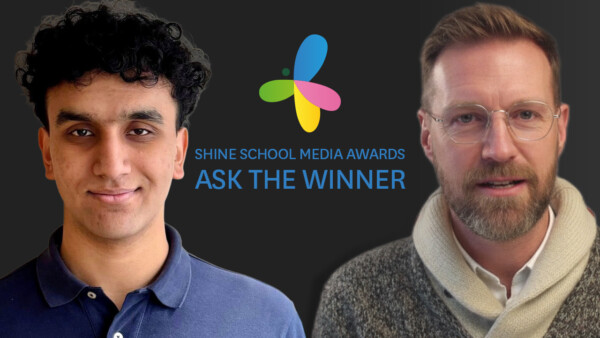
This week on ‘Ask the Winner,’ I’m talking to Aditya Jayaram, winner of the 2024 Terry Mansfield Award CBE prize for Tomorrow’s Talent for his work transforming his school magazine Black and White.
When Aditya took over his school’s “flagship publication” at the start of Year 12, it was struggling. “It was a much smaller scale than it once was,” he recalls.
By the end of the year, alongside a great team, he’d transformed it into a proper publication with three editions and a school-wide audience. Then came the Shine Awards recognition – and everything that followed.
Rebooting the magazine for the long term
Aditya’s interest in student journalism started young – back in Year 6, writing for his junior school. By the time he got to St Paul’s, he was writing sports articles for Black and White. His work impressed the teacher in charge, Mr Larlan.
But overall, previous iterations of Black and White had been “very much a senior thing” – A-level students writing, editing, doing nearly everything.
“We could have a really good year and that would have been great. But then a new team comes in who haven’t got any experience or weren’t really part of the project beforehand, and it might just die off.”
His solution was to lean into the experience of his own ambition, starting senior and junior editorial teams – bringing in Year 9, 10, and 11 students alongside the sixth formers.
“When you’ve got more guys involved from different years, of course their mates and friends are going to be interested in it. That really helped us expand our reach and presence in the school.”
But more importantly: “It gave us progression. A lot of the guys who are now senior editors and the editor-in-chief were junior editors at the time when I was in charge. That made the project a sustainable thing beyond my tenure.”
The staff crossword breakthrough
One innovation particularly stood out. “We used to do this staff crossword, which I think was actually a huge part of our success. We’d go around the school and collect quotes from different teachers that they’d said in lessons and put that into a crossword.”
The thinking behind it? “You need to think from a student’s perspective. If I’m sitting there two years younger in a classroom during registration time and someone comes around with a magazine, what’s going to make me want to open it? What’s going to keep me engaged and reading it for another 15 minutes?”
“The great thing about student media is that the writers and producers are from the same group as the audience. You can’t know your audience any better than being your audience yourselves.”
Trust the process
Looking back to that 16-year-old summer version of himself, what advice would Aditya give?
“You’ve just got to trust the process. I remember spending hours and hours with all the foundation work.”
“At the start, you’re learning what to do. By our sixth or seventh edition, a lot of the process became automated and more efficient. There are so many skills I’ve gained – designing, editing, writing – which I’ll carry forward throughout the rest of my career and my life. Part of the struggle and the process and the learning is the benefit of it.”
“Those struggles are almost what makes the project valuable.”
I hope Aditya’s story shows you that building something sustainable – with junior teams, dedication and genuine audience understanding – can transform a struggling school magazine into something extraordinary.
Enter the 2026 Shine School Media Awards
– with our new entry form now online
Could your school magazine, newspaper or podcast be this year’s winner? The Shine School Media Awards celebrate student journalism and school media projects that give young people a genuine voice.
Entry is open to all UK schools. Winners receive money-can’t-buy experiences including mentoring from industry professionals, newsroom visits and work experience opportunities.
Til next week,
Richard
Chair of Shine