10th February 2026
Freddie and Bella on passion, detail and writing about ‘what makes you jump’
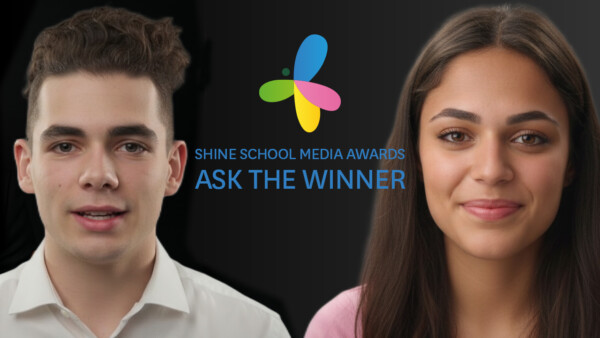
Hello everybody,
This week on ‘Ask the Winner,’ I’m talking to Freddie Hayles and Bella Coombes, who transformed their school politics magazine The Eagle from “magazines that basically just looked like Word documents” into something that had their schoolfriends asking “when’s the next edition coming out?”
Freddie served as graphic designer, Bella as editor-in-chief. Together, they reorganised the entire structure of The Eagle – introducing proper application processes, defined roles and thematic organisation across three issues.
In pursuit of perfection
When they saw the first issue in print, their initial reaction was to see all the things they wanted to do next.
“Everyone was saying, ‘Oh great, this is the best politics magazine we’ve had in years.’ But we thought, ‘This is wrong, this is wrong, we need to do this better for the next issue.’ That hunger to keep going and develop our skills as graphic designer and editor made us hungry to try harder for the future.”
One technical detail obsessed them: the bleed. “It’s basically just designing over the edge so when you cut it down, it fills the page,” Freddie explains. Many school magazines can’t achieve this because photocopiers don’t print edge-to-edge, leaving a border. The Eagle team decided to cut theirs down manually.
“It made a difference,” says Freddie. “Giving a damn about that level of detail makes a difference.”
Another detail? They changed the shade of white on the front cover. “For some reason we bought thought, ‘Oh my God, that’s just made all the difference.’ It’s still white. It’s warm white. But it made such a big difference to the photo in front of it.”
Pride in a common purpose is infectious
“Me and Bella just really cared about it,” says Freddie. “I always think that’s quite infectious. Other people then also want to care about it, want to get involved and then it gets rolling.”
That care showed in the design. “People being able to see their opinions and their voice actually printed with such great production quality actually increased engagement. We had so many writers that by the time we entered the Shine Awards, it was 20 pages.”
Writers came back saying “I’ve already written my next article.” The team was “getting bombarded” with messages asking when the next edition would come out.
“As a young person, it’s quite rare not only to see your voice in writing, but knowing that somebody else has taken the care to look through it, pick things out, give you feedback and then actualise it in a design context – make it actually speak through the page. I think that feedback and the vehemence with which young writers returned to us was something really special.”
Know your writers personally
Bella’s advice to any incoming school editor-in-chief centres on connection: “Know your writing base. People are more inclined to create better quality pieces if they feel like you are genuinely invested in them.”
She’d ask every writer in meetings: “What’s something that you’ve seen in the news recently that’s making you tick? What makes you jump out of your seat and go, ‘I need to write about that’? That’s how you know what to feature.”
“You can’t preserve someone’s voice if you don’t know what that person’s voice even is. If the only evidence you have of a person is an article they’ve written, you don’t know them personally or their process, then I don’t think you can achieve an authentic voice in writing.”
Bella’s editing process was collaborative. “It’s not as simple as: here’s the deadline, somebody writes, sends it to an editor, gets sent back, then it’s published. It’s collaborative all the time. Having that conversational relationship with writers was really crucial in creating something quite special.”
From the page to the awards
“We spent so many hours looking at the magazine and it felt quite isolated,” Bella reflects. “We went to the awards and realised there’s actually a bigger world and we’re all connected through this passion for really specific and different interests.'”
“Being in a room full of people who’ve experienced the hard work and can relate to the intricacies of a process like that was something really special.”
I hope Freddie and Bella’s story shows you that the details matter – from that special tone of white, building a working relationship with writers to finding those topics that change how you feel about being a writer. Passion is infectious.
Enter the 2026 Shine School Media Awards
– with our new entry form now online
Could your school magazine, newspaper or podcast be this year’s winner? The Shine School Media Awards celebrate student journalism and school media projects that give young people a genuine voice.
Entry is open to all UK schools. Winners receive money-can’t-buy experiences including mentoring from industry professionals, newsroom visits and work experience opportunities.
We’re back after half-term with more Ask the Winners episodes.
Have a lovely break,
Richard
Chair of Shine