17th March 2026
The Yarm School team on launching in style and personal stories
Hello everybody,
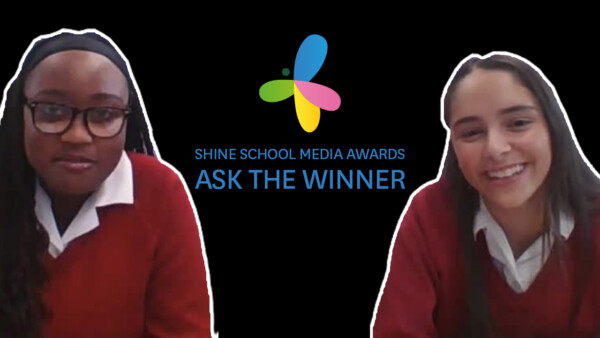
This week on ‘Ask the Winner,’ I’m talking to Sarah and Denai from Yarm School in North Yorkshire – lead editors of The Dovecote magazine’s fifth edition, which swept the board at the 2025 Shine Awards.
The Dovecote started five years ago in 2020, founded by Katie Hunt. “It’s a good way of showing the talent that our student body has,” Sarah explains. “It contains art, nonfiction, fiction, travel writing, poetry. It’s just a way that students can express something that matters to them in different ways.”
Sarah and Denai joined as Year 10 students when Miss Breslin offered them the opportunity. “I’d never really been involved with that kind of thing,” Sarah recalls. “When it was such a great success, it was really rewarding.”
“We didn’t realise how good it was until the end”
When they started work on the fifth edition in 2024, they had no idea how successful it would become.
“I don’t think we realised properly until the end when we submitted it how good it was,” Sarah says. But the moment of truth came when the magazine left the classroom. “We had so many people coming up to us, wanting to have a look at it and asking us how much it was. That’s when we began to see how special the magazine was.”
The editorial team makes difficult decisions about what to include. “We had to cut some articles because so many people had put forward different pieces.” But having momentum helps: “The Dovecote having been going a few years now means lots of people know about it. Everyone kind of wants to contribute.”
And quality submissions that don’t make it in one year? “We have even more really quality submissions for the next year.”
Weaving art into the magazine
The Dovecote doesn’t just throw everything at the wall. Art and writing are carefully interwoven.
“We try and get artworks that match the writing so we can weave them into the magazine,” Denai explains. “We don’t just have a section on art and then the writing pieces. We have some artworks then some writing, and often we get artworks that go with our writing – sometimes it’s purely coincidental that an art piece fits really well with somebody’s writing.”
They also commission work. “One of our editorial team, Yasmin, we asked her to do quite a few art pieces. We gave her the articles and she would take her interpretation of it – if it was poetry, what she thought the meaning was – and then produced an art piece for that.”
This approach has become more common as schools move away from photography. “Last year we had a lot of art submissions. I think ours not having photography made it definitely stand out as well.”
The launch event that brought the magazine to life
The fifth edition introduced something completely new: a launch event.
“It was the first time we’d ever done it and it was a really big success,” Denai says. “Pupils had the chance to showcase their work to teachers and parents who came. We also got to sell some of our first issues and held our own little award ceremony so that pupils could get recognition for their work and certificates.”
The evening took place in the school’s studio theatre. “People come in and there’s drinks beforehand, then we all sit down. Pupils can read out some of their pieces – their poems, travel writing, journalism. We had a memes page in our magazine, so during the event we put some of them on the screen so everybody could have a little laugh.”
There was even a dance performance. “We tried to encapsulate all parts of Yarm School within the launch event.”
Why does it work? “When you’re reading in the magazine, sometimes the tone doesn’t always come across as powerfully. Having that personal face-to-face performance was really effective. Something that someone might skim past when flicking through – when they hear it read out loud, they might be stopped in their tracks.”
The launch event is now a tradition. “It’s marked it as a day for The Dovecote in the school calendar.”
Raising awareness beyond the magazine
The team also raises money through creative recycling. “We made accessories from recycled uniform – pre-loved from the school. We made hair ribbons and all sorts, and sold those at the Christmas market and summer fair.”
For Denai, a personal highlight was interviewing Miriam from the Halo Project, a charity that raises awareness about abuse towards people in minority communities. “One of the few charities in the northeast that do focus on the minority within the population. Learning about such heavy and deep topics in a mature way and having the school support me in doing that.”
At Stationers’ Hall
When the awards came around in June, the whole editorial team helped decide which pieces to enter.
“We had a whole meeting and talked to the entire editorial team. We’d read through the possible articles together and choose which one we think should go in.”
Winning was surreal. “I think we cried a little bit. It made us realise our potential and how supportive everyone is in the school. The magazine sort of brought Sarah and I together – we weren’t that close before. We learned how we cope under pressure and how eager we can get about certain things.”
Building on success
For the next edition, they’re introducing Heads of Departments (STEM, art and others) and running workshops during editorial sessions.
“A workshop for journalism, a workshop for travel writing and poetry and art. Those who do have talent for certain areas can hone their skills. It’s student-led – for example, Isaac who does travel writing works with a group, they’ll give him ideas, he’ll go write it, then come back and give them feedback.”
Their advice for students starting a magazine? “The most powerful pieces are the ones that are personal to you because that way you can showcase all your thoughts and opinions. When you have an idea, go for it and just write about it – it will produce a really good piece.”
And crucially: “Definitely have fun while you’re doing it to keep the spirit going. If you have fun, a lot of other people are gonna want to have fun with you. And then you can create this amazing thing that you didn’t even know you could help drive and fuel.”
I hope Sarah and Denai’s story shows that building something sustainable, with launch events, workshops and their own distinctive culture of fun, creates a magazine (or any school media project) that people want to be part of.
Enter the 2026 Shine School Media Awards
– with our new entry form now online
Could your school magazine, newspaper or podcast be this year’s winner? The Shine School Media Awards celebrate student journalism and school media projects that give young people a genuine voice.
Entry is open to all UK schools. Winners receive money-can’t-buy experiences including mentoring from industry professionals, newsroom visits and work experience opportunities.
We’re back next week with more Ask the Winners,
Richard
Chair of Shine