14th April 2026
Ask the Winner: Vivianne Zhang Wei on finding your voice (bonus episode)
Hello everybody,
Surprise! We have a very special bonus episode of Ask the Winner.
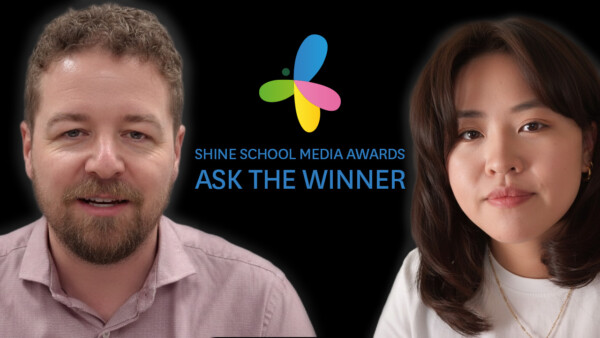
This week, I’m handing over hosting duties to Richard Hartley-Parkinson, executive editor at Metro newspaper, who’s interviewing Vivianne Zhang Wei, 2020’s Editor of the Year and one of Shine’s most remarkable alumni.
Vivianne’s magazine Two Zero One swept the board in 2020, winning Best Magazine, Best Cover, Best Content, and Editor of the Year. What makes her story even more impressive? She’d only moved to the UK from Sweden at age 15. English was her third language. Remarkably, within a year of joining the magazine editorial team, she was running the project.
Six years later, she’s at Oxford University studying Contemporary Chinese Studies, still deeply involved with Shine and developing her own documentary photography project in rural China.
Richard Hartley-Parkinson opens with this: “After 20 years in the newsroom, I can tell you the next generation isn’t just coming for our jobs, they’re already doing them.”
Battling the plague
The 2020 issue of Two Zero One was created during the first pandemic year with students at home and in some cases abroad. On a practical level, having an excuse to reach out, schedule regular calls, maintain a group chat was helpful. “But on a deeper level, being prompted to reflect on what we were going through and contextualise it within this broader historic crisis became a way to process the anxieties we were going through daily.”
The magazine’s editor’s note referenced Albert Camus’ The Plague: “How we fight a plague is not through heroism, but through common decency.”
“I think that encapsulates quite well what our guiding idea was with this issue. It wasn’t amazing reportage of the pandemic at large. It very intimately captured how one international school community in the English Midlands navigated this global pandemic.”
“We were really living through history and we’ve produced this quite valuable historical record, which now sits in our school archive that dates back 500 years.”
Finding your voice in a non-native language
Vivianne moved to the UK a year before becoming editor. She was still quite shy to begin with as she began settling in. When teacher Ms Adams and former editor Alia asked if she wanted to take over, “that meant a lot to me. Once given the responsibility, I poured my heart and soul into it.”
Her advice for writing in a non-native language? “Read. Read a lot. But read widely.”
“I made the mistake of thinking: I haven’t read all these classical novels everyone else has. So I started with Pride and Prejudice, To Kill a Mockingbird, Great Gatsby – which was great. But I ended up with this very 19th, 20th century vocabulary.”
“Then I started reading more contemporary journalism. I read a lot of The New Yorker while working on the magazine. You can see that reflected in the style. Today I read a lot on Substack.”
Embrace the student-ness of student journalism
“If I got to do a student journalism project again now, I would really embrace the student-ness of student journalism. There’s a lot of trying not to be like student journalism. But once you leave school you realise what a rare opportunity it is to write for and about a community that you’re so deeply embedded in.”
“Even at university level student journalism feels quite different. In real journalism, you’re often writing about a community you’re not directly part of, for readers you might also not be part of. The student journalism experience is really special.”
Richard Hartley-Parkinson agrees: “I worked on local newspapers, living and working in the community, finding those small stories but making them an issue people care about. It’s a skill.”
What impressed the judges
Vivianne later joined Shine’s judging panel. She saw many school projects “that tried quite hard not to be school projects – very professionally produced, tackling big global political topics.”
“Which is impressive in its own way. But I think it’s a shame. Getting to work on a student project and making things meaningful to your immediate school community – that to me is what makes a really good student media project.”
Her advice for impressing judges? “It’s not necessarily a good thing if you pick it up and it’s so high quality you can’t even tell it’s a student magazine. The issues that really impressed people were: this is clearly a student project telling stories that are relevant and interesting to the people reading it.”
“The guiding question: what is it that my peers would actually read and what would actually resonate with them? If my peers want analysis of American politics, they’ll go to CNN or New York Times. So what’s unique about my perspective as a student? What stories do I have access to in my unique position at this school?”
Where she is now
After graduating, Vivianne travelled in China, picked up photography, and started her own writing and photography project documenting everyday stories in rural parts of the country. She’s developing that work during her master’s at Oxford.
“Fundamentally it traces back to the same instinct I was working with on Two Zero One and with Shine: telling human, everyday stories and creating spaces for other people to do that as well.”
—
Thank you to Richard Hartley-Parkinson for guest-hosting this bonus episode and to Vivianne for showing us what’s possible when you take initiative and pour your heart into something.
Enter the 2026 Shine School Media Awards
– with our deadline coming up soon!
Could your school magazine, newspaper or podcast be this year’s winner? The Shine School Media Awards celebrate student journalism and school media projects that give young people a genuine voice.
Entry is open to all UK schools. Winners receive money-can’t-buy experiences including mentoring from industry professionals, newsroom visits and work experience opportunities.
Don’t forget, our deadline for entries is 1st May 2026.
Have a great Easter break,
Richard
Chair of Shine